Tooth Filling Aftercare: What to Expect After Your Visit
Leaving the dentist with a new filling means your tooth is restored and healthy again. But once you step out of our office, the success of that restoration depends partly on how you care for it in the hours and days that follow.
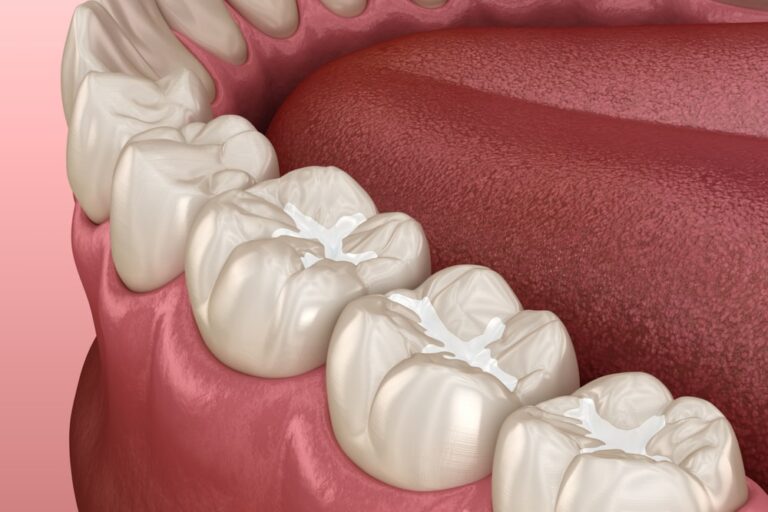
At Green Family Dental, we use modern composite (tooth-colored) fillings that bond directly to your tooth structure. While these materials are durable and aesthetic, knowing how to treat them immediately after your appointment is key to your comfort and the filling’s longevity.
Here is a simple guide to navigating the first few days after your procedure, managing sensitivity, and ensuring your bite settles in perfectly.
Eating and Drinking: The First Few Hours
One of the most common questions we get is, “When can I eat?” The good news about composite fillings is that they are fully set by the time you leave the chair. The curing light we use hardens the material instantly.
However, there is a catch: the anesthetic.
Managing Numbness
If we used a local anesthetic during your procedure, your lips, tongue, and cheeks might feel numb for several hours. While the filling itself can handle chewing immediately, your soft tissues cannot handle accidental bites.
It is incredibly easy to bite your cheek, lip, or tongue when you cannot feel them. This can lead to painful ulcers or swelling once the numbness wears off.
Our recommendation:
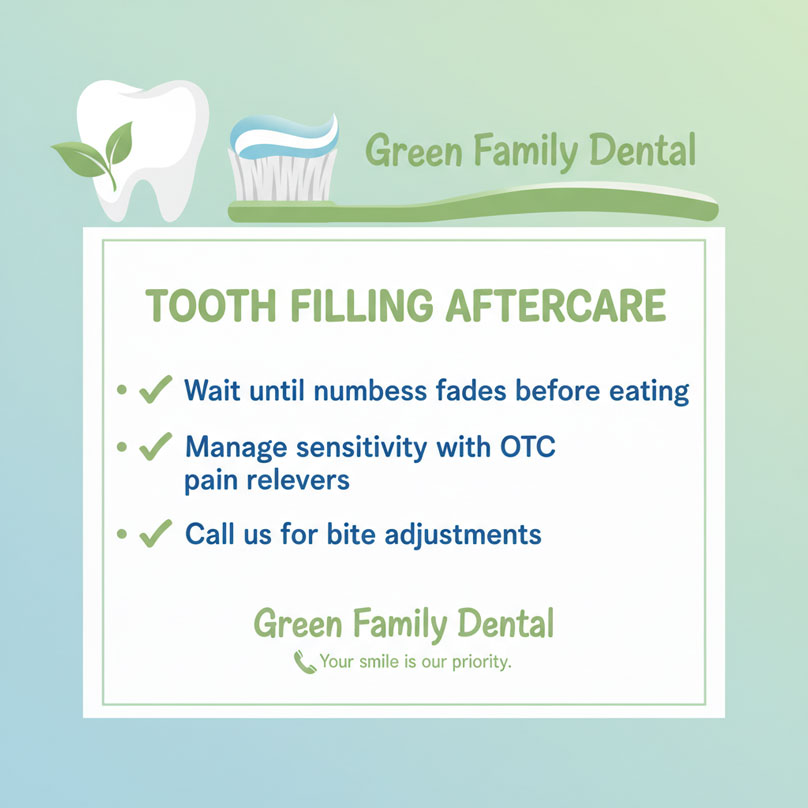
- Wait it out: Try to avoid eating solid foods until the anesthetic has completely worn off.
- Watch the temperature: Avoid hot beverages (like coffee or soup) while you are numb. You could burn your mouth without realizing it.
- Chew carefully: If you must eat before the feeling returns, choose soft foods (like yogurt or smoothies) and chew on the opposite side of your mouth.
Special Note for Children
If your child has had a filling, they need extra supervision until the numbness fades. The sensation of a “fat lip” or sleeping tongue is strange to them. Many children will inadvertently chew on the inside of their lip or scratch at their face, causing significant damage to the soft tissue. Keep an eye on them to ensure they don’t injure themselves.
Sensitivity and Pain Management
It is normal to experience some sensitivity after a filling. You have just had a surgical procedure on a living tissue, and your tooth needs time to heal.
What Causes Sensitivity?
Sensitivity to cold, heat, pressure, and even sweet foods is common for a few weeks. Generally, the deeper the cavity was, the closer it was to the nerve, and the more sensitive the tooth will be during the healing process.
You might also notice tenderness in the gum tissue near the filling. This is usually due to the irritation from the procedure itself or the anesthetic injection site. This soreness is temporary and should subside within a few days.
How to Manage Discomfort
For most patients, over-the-counter pain relievers are sufficient to manage this phase.
- Medication: Ibuprofen (Motrin™, Advil™), Tylenol™, or aspirin work well to alleviate tenderness.
- Desensitizing Toothpaste: If cold sensitivity is an issue, using a toothpaste designed for sensitive teeth can help block pain signals from the nerve.
If your sensitivity persists beyond a few days without improvement, or if it seems to be getting worse rather than better, please contact our office.
Checking Your Bite
When we place a filling, we do our best to shape it so it fits naturally against your opposing teeth. We check your bite with articulating paper before you leave. However, because you are numb, you might not be biting down exactly as you normally would.
Once the anesthetic wears off, pay attention to how your teeth come together.
- Does it feel high? If you bite down and hit the new filling before your other teeth touch, the filling might be slightly too high.
- Is it painful to chew? If chewing causes a sharp pain or a strange pressure specifically on that tooth, the bite is likely off balance.
Do not wait for this to go away. A “high” bite can bruise the ligament around the tooth, leading to persistent soreness. If your bite feels uneven, call us for a simple adjustment. It takes just a few minutes to smooth it down, and it will provide instant relief.
Long-Term Care for Your Filling
Composite fillings are strong, but they are not indestructible. Treat them with the same care you give your natural teeth.
Watch What You Eat
Just as you would with natural teeth, avoid chewing excessively hard foods on the filled tooth. Chewing on ice, hard candy, or cracking nuts with your teeth can fracture the filling or even the tooth structure around it.
The “New” Feel
You might notice that the new filling feels different to your tongue. It may have a slightly different texture or contour than your original tooth structure. Your tongue is incredibly sensitive and magnifies these small differences. Give it a few days; usually, you will become accustomed to the new shape and won’t notice it anymore.
When to Call Us
Most fillings settle down within a few days to a couple of weeks. However, we want to hear from you if things don’t seem right.
Contact Green Family Dental if:
- You have persistent pain that isn’t helped by over-the-counter medication.
- Your bite feels uneven or “high.”
- You have questions about your recovery.
We are here to ensure your restoration is comfortable and functional for years to come.